A 3PL (third-party logistics provider) is a company that handles warehousing, order fulfillment, and shipping on your behalf. Your inventory lives in their facility, their team picks and packs your orders, and their carrier relationships get your packages to customers. Most ecommerce brands move to a 3PL once order volume outgrows what they can manage in-house, typically somewhere between 200 and 500 orders per month. A good 3PL lowers your cost per order, frees your team from day-to-day logistics work, and scales with your business without asking you to lease warehouse space or hire a fulfillment staff.
Every ecommerce brand eventually hits the same wall. Orders are going out the door, but they’re consuming more time, more square footage, and more headcount than the business can sustainably give them. A spare bedroom becomes a garage, the garage becomes a rented unit, and at some point the founder realizes they’re running a warehouse operation instead of a brand.
Third-party logistics providers exist to solve exactly that problem. A 3PL is a company that takes over the physical side of order fulfillment, warehousing your inventory, packing and shipping your orders, and handling returns, so your team can focus on product, marketing, and growth.
This guide covers what 3PL services actually include, how the fulfillment process works day to day, what it costs, when it makes sense to switch, and how to evaluate a provider. Consider it a reference, not a sales pitch. By the end, you should be able to tell whether a 3PL fits your business and, if it does, what to look for.
3PL stands for third-party logistics.
When you work with a 3PL company, you outsource your warehouse, fulfillment, and shipping administration to them. Many 3PL services will do inventory organization, supply chain management, and delivery monitoring at more affordable costs than in-house warehouses.
The name comes from a simple way of thinking about the parties involved in getting a product to a customer: you’re the brand, the first party. Your customer is the second party. The company that physically stores, picks, packs, and ships the product is the third party, hence third-party logistics.
3PL sits in the middle of a broader spectrum of logistics models. With 1PL, the brand handles its own shipping and warehousing, with no outside logistics partner involved. With 2PL, an asset-based carrier, like a freight or parcel company, moves goods from one point to another but doesn’t manage warehousing or order fulfillment. With 3PL, an outsourced logistics partner handles warehousing, fulfillment, and shipping on the brand’s behalf. And with 4PL, a single provider oversees the entire supply chain, including sourcing, manufacturing coordination, and the management of multiple 3PL relationships.
For most ecommerce brands, a 3PL is the relevant model. A 4PL is generally reserved for enterprise supply chains with a lot of moving parts across sourcing, production, and distribution. For a closer look at where each model fits, see our guide on the different types of 3PL companies.
“Outsourcing fulfillment” can sound abstract until you break it into what actually happens inside a 3PL’s four walls. Here’s the full picture.
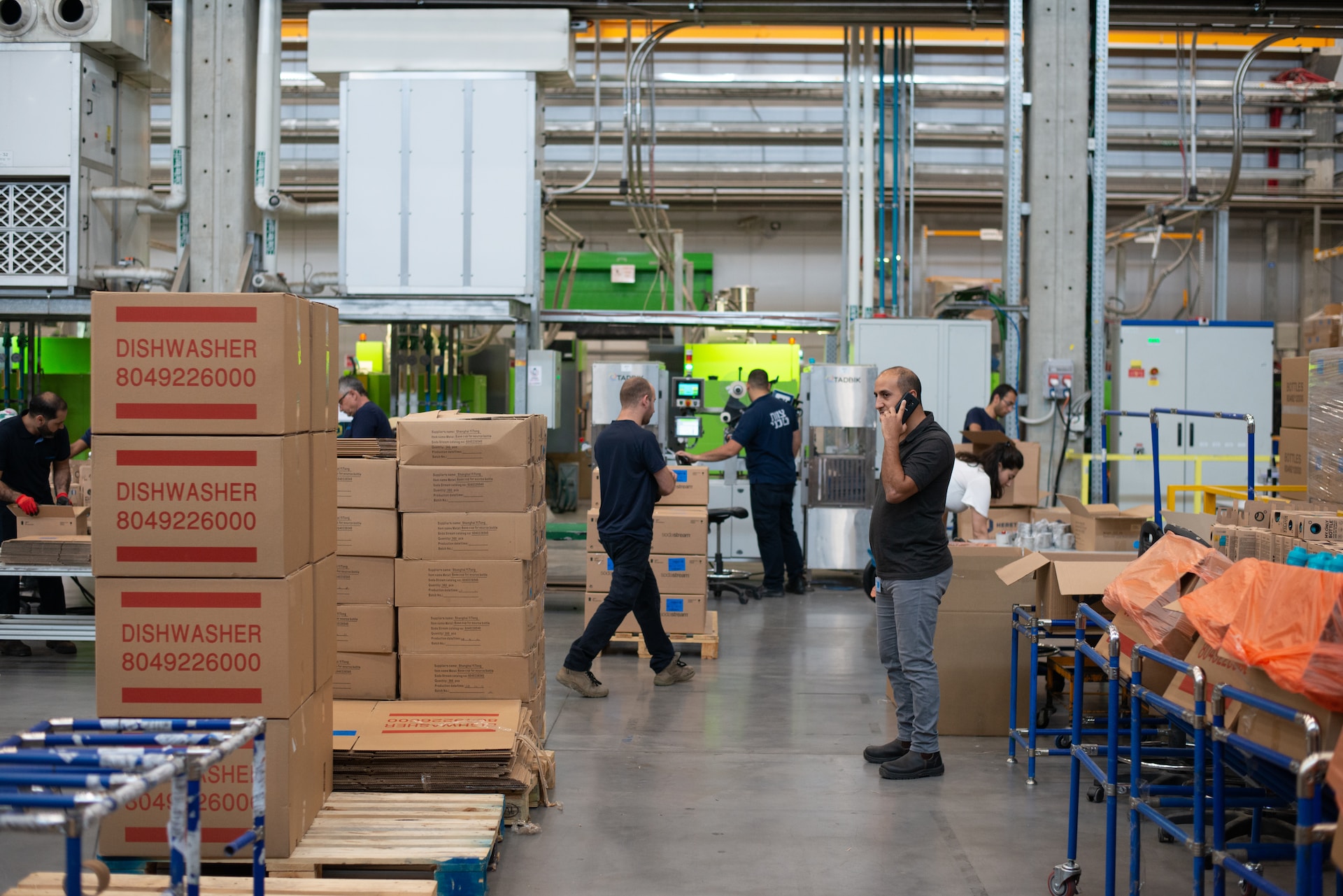
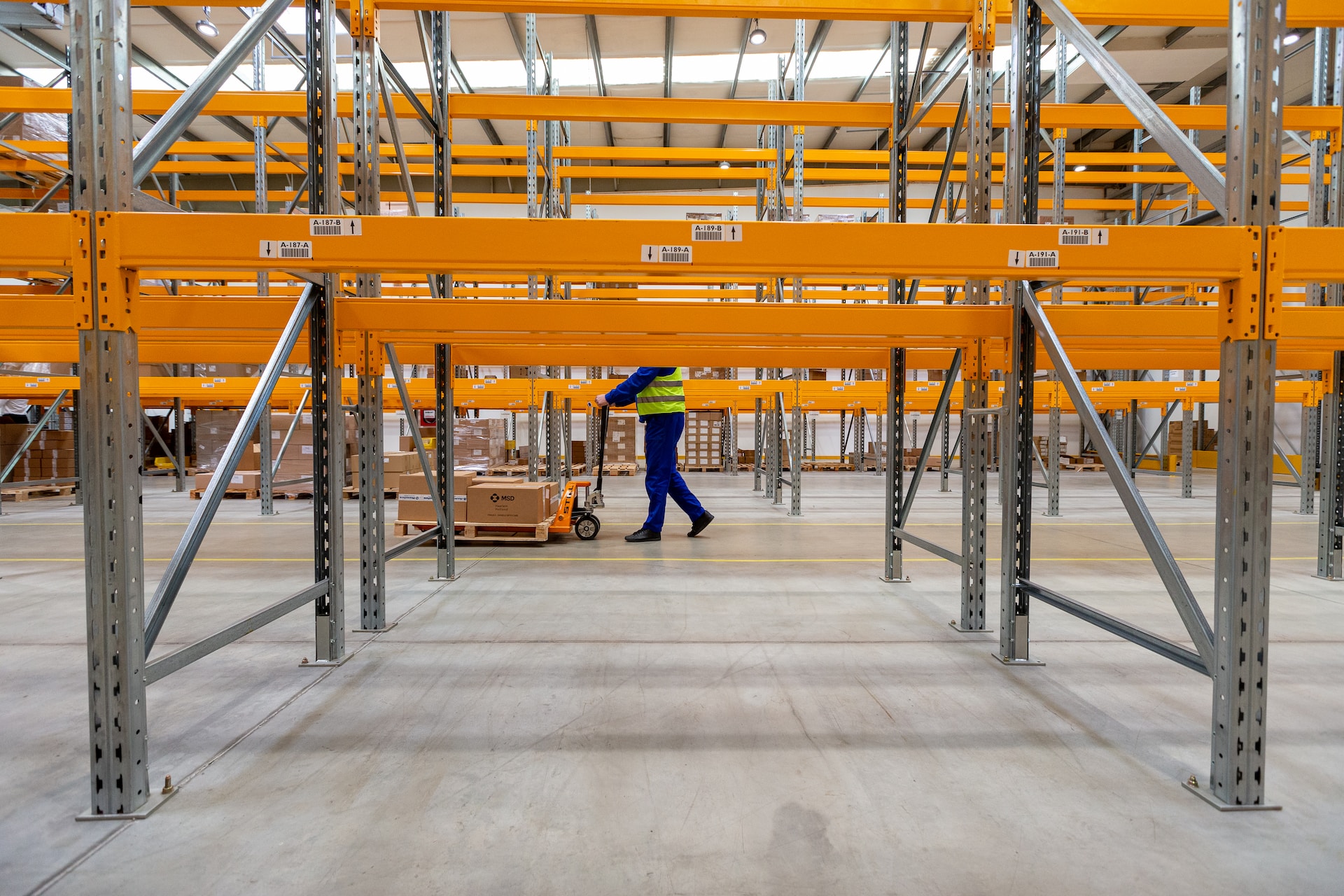
The process starts when your inventory arrives at the 3PL’s warehouse, whether it’s coming from a manufacturer overseas or a domestic supplier. The warehouse team checks the shipment in, counts it against your purchase order, labels each SKU, and stores it in the facility.
From there, you get visibility into your stock through the provider’s Warehouse Management System (WMS), a piece of software that tracks inventory in real time. Instead of calling the warehouse to ask how many units of a product are left, you log into a dashboard and see the number update as orders go out. For more on how this works day to day, see our guide on inventory tracking.
When a customer places an order on your Shopify store, Amazon listing, or wherever you sell, that order syncs automatically to the 3PL’s WMS. A warehouse associate, or in more automated facilities, a picking system, pulls the correct items from storage.
From there, the order gets packed according to your specifications: the right box size, the right packing materials, branded inserts if you use them, poly bags if that’s your preference. This is also where value-added touches like custom labeling or promotional inserts get added. Our pick and pack guide covers the full process in more detail.
Also read: Finding the Best 3PL for Your Small Business’s Unique Needs
Once an order is packed, the 3PL generates a shipping label and selects a carrier and service level based on your shipping rules. This is one of the more underrated advantages of working with a 3PL: because they’re shipping on behalf of many clients at once, they’ve negotiated discounted rates with carriers that an individual brand shipping in smaller volumes typically can’t access on its own.
Most 3PLs maintain relationships with UPS, FedEx, USPS, DHL, and regional carriers, and route each order to whichever option makes sense for cost and delivery speed. Tracking numbers flow back to your storefront automatically, so your customer gets a shipping confirmation without anyone on your team touching it.
Related articles:
The Complete Guide to 3PL Product Kitting and the Different Types of Packaging Solutions
When to Outsource Your Logistics to 3PL Warehouses
When a customer initiates a return, it comes back to the 3PL, not to your garage. The warehouse team inspects the item and, depending on your return policy, either restocks it, flags it as damaged, or disposes of it. A well-run returns process protects the value of your inventory and speeds up how quickly a customer gets their refund or exchange. See our guide on reverse logistics for a deeper look at how this works.
Beyond the core fulfillment loop, many 3PLs, including Your Logistics Corp, offer services that go further: kitting and assembly, custom packaging, subscription box fulfillment, Amazon prep, and specialty labeling. These let you outsource operations that would otherwise require dedicated warehouse staff and equipment on your end. Learn more in our kitting and labeling guide.
There are many steps of the order process that a 3PL company can make more comfortable. Below, we’ll look at key facts about 3PL distribution, shipping, and more.
3PL services can provide technology that makes it easier to view your inventory. Instead of manually communicating with people in the warehouse, 3PLs can give you software to view live supply changes. It can also alert you when your stock is running low.
For example, Your Logistics offers a digital customer dashboard. There, you can view customer orders, inventory, and even returns from afar.
One of the best parts of 3PL logistics is how much easier it is to manage high-volume orders with them. 3PL fulfillment centers have employees to track, kit, and label products for you. So, you can focus on core business functions instead of every single order.
You may wonder, how does 3PL shipping and distribution work?
First, the 3PL center receives your inventory. When the customer places their order on your eCommerce site, the 3PL staff begin picking their items and putting them in kits. Based on your agreement with the company, they can use different packing materials like branded boxes or poly bags to ship.
The 3PL company determines the combined weight of your items so they can lower it before shipping. With their expert insight, they can keep 3PL logistics costs much lower.
Finally, a carrier like USPS or UPS comes to pick up goods for shipping. And a tech-based company like ours will give you the tools to check order statuses at any time.
If a customer wants a return, 3PL companies typically handle this process, too.
Related articles:
The Reasons Your Subscription Fulfillment Service Needs 3PL.
How to Find the Best Ecommerce 3PL Partner
Did you know that 77% of users will abandon an online order if the shipping cost is high? Even if you didn’t, you’d be glad to know that 3PL logistics can lower the price.
3PL companies can have locations across different regions and countries. Having multiple centers means they can offer One or Two-Day Shipping options at lower prices. And when it costs less to send an item, you can more easily pass free shipping options down to your customers.
3PL distribution is also handy for making bulk orders more affordable. So if you are looking to send many items in B2B or retail deals, you might enjoy a 3PL company.
Unlike a flat monthly warehouse lease, 3PL pricing is typically broken into several components, and understanding each one matters if you want to compare providers accurately.
The main fee categories are:
Receiving fees are charged per pallet or per carton when your inventory arrives. Storage fees are billed monthly, usually per pallet or per bin. Pick and pack fees are charged per order and sometimes per item within an order. Outbound shipping is passed through at cost or with a markup, depending on the provider. Returns handling is charged per return unit processed.
Beyond those core categories, watch for additional fees: account setup charges, monthly minimums, special handling surcharges for oversized or fragile items, and peak season surcharges around the holidays.
One advantage of the 3PL pricing model is that it scales with your volume. A fixed warehouse lease costs the same whether you ship 100 orders or 10,000 orders in a given month. A 3PL’s fees move with your order count, which means you’re not paying for capacity you’re not using.
When comparing providers, be cautious of rate cards that leave out fee categories entirely, vague language around peak surcharges, or shipping markups that aren’t clearly disclosed upfront. For a full cost breakdown, see our 3PL pricing guide, and for a rundown of charges to watch for, see fulfillment hidden fees.
Want to see what 3PL pricing looks like for your order volume? Get a Quote
Related articles:
A Complete Guide to Warehouse Distribution Services
3PL Partnership: The Key to Lowering Retail Chargebacks
3PLs operate at scale. Shared warehouse infrastructure, negotiated carrier rates, and optimized pick paths combine to produce a lower cost per order than most brands can achieve fulfilling in-house, particularly at volumes under 10,000 orders per month.
Here’s an article about the 3 Important Strategies to Optimize Your 3PL Operations
Another related article about 3PL vs. In-House Fulfillment: True Cost Comparison
A warehouse lease, warehouse staff, and fulfillment equipment are fixed costs that don’t shrink when orders slow down. A 3PL converts those fixed costs into variable ones tied to actual order volume.
Here’s a great article about What a 3PL Can Do to Take Your Business to the Next Level
A 3PL with multiple fulfillment centers can position inventory closer to your customers. Shorter shipping zones mean faster delivery and, often, lower shipping costs, without switching carriers or service levels.
WMS platforms, real-time inventory tracking, order management integrations, and reporting dashboards are expensive to build and maintain from scratch. With a 3PL, these tools come built into the service. See our guide on 3PL software for what to look for in a provider’s tech stack.
The hours freed up by handing off hiring, scheduling, receiving, packing, and carrier disputes typically get redirected toward sales, marketing, and product development, the parts of the business that actually grow revenue.
Related articles:
Why a 3PL Provider Can Be Beneficial for Your Business
5 Benefits of Outsourcing Fulfillment to 3PL Companies
There’s no single trigger that tells every brand it’s time, but a few signals tend to show up together.
Most brands find the economics of a 3PL become favorable somewhere between 200 and 500 orders per month, the point at which the cost of in-house labor, space, and systems starts to exceed what a 3PL would charge for the same work.
If your space is consistently at or near capacity, or you’re paying for overflow storage on top of your existing lease, the cost comparison tips further in favor of outsourcing.
Rising pick errors, shipping delays, and inventory discrepancies are usually a sign that your current setup has hit its ceiling, not that your team needs to work harder.
Moving into new regions, adding new sales channels, or launching new product lines all add complexity that’s easier to absorb with an established 3PL network already in place.
If you or your ops team are spending real hours each week on fulfillment logistics instead of growth work, the opportunity cost of staying in-house starts to add up fast.
The question usually isn’t whether you can afford a 3PL. For most growing brands, it’s whether you can afford not to have one.
For a full diagnostic, see signs it’s time to switch to a 3PL, and for the numbers side of the decision, see 3PL vs. in-house storage.
Not sure if your business is ready for a 3PL? Our team can help you run the numbers. Get a Quote
Related article: 5 Reasons Why Companies Are Switching to 3PL Providers
Once you’ve decided to make the move, the provider you pick matters as much as the decision itself. Here’s what to evaluate.
Where a 3PL’s facilities sit relative to your customer base determines shipping zones and average transit times. A provider with a single East Coast facility will add a day or two, and added cost, to every West Coast order. Your Logistics Corp, for example, runs East, West, and Central fulfillment centers to keep shipping zones short on both coasts.
Can the provider connect to your ecommerce platform, whether that’s Shopify, WooCommerce, or Amazon, from day one? What does their WMS reporting show you? Do you get real-time inventory visibility or a weekly export? See our integrations page for what to expect.
Ask for a complete rate card before signing anything. Every fee category, receiving, storage, pick and pack, returns, and any peak or accessorial surcharges, should be disclosed upfront. See fulfillment hidden fees for what tends to get buried.
What does the provider commit to in writing on order accuracy, on-time ship rate, and receiving turnaround? A verbal promise isn’t an SLA.
Related articles:
3PL KPIs and SLAs: What to Track and Why
Maximizing Your ROI: How Working with a 3PL Can Benefit Your E-commerce Brand
How does the provider handle the transition? Is there a dedicated point of contact? What does the first 90 days look like?
Ask for current clients at roughly your order volume and in your product category, then talk to them directly.
For the full evaluation framework, see how to evaluate the services of a 3PL provider.
Most brands are fully operational with a new 3PL within two to six weeks of signing. The process generally covers platform integration, inventory receiving, test orders, and go-live.
On your end, you’ll want to prepare a SKU catalog with weights and dimensions, platform credentials, your shipping preferences, and your return policy documentation. The first 90 days after go-live tend to be the stabilization window, the period where integrations get cleaned up, inventory counts get reconciled, and the operational rhythm settles in.
For the full breakdown, see 3PL onboarding: what to expect in your first 90 days.
Your Logistics Corp operates fulfillment centers across the East, West, and Central United States, with facilities in Texas (Lewisville and Flower Mound), Maryland (Hagerstown), and Nevada (North Las Vegas). This is our Central hub in Dallas, East hub in Maryland, and West hub in Las Vegas. For brands with a national customer base, this network lets us split inventory across nodes to shorten average shipping zones and speed up delivery, without changing carriers or service levels.
Our integration support covers all major ecommerce platforms and marketplaces; see the full list on our integrations page. Orders sync automatically from your storefront to our WMS, and you get real-time inventory visibility through our client dashboard the entire time.
Pricing is transparent from the first conversation. We walk through the rate card line by line, receiving, storage, pick and pack, outbound shipping, and returns handling, before anything gets signed. See our 3PL pricing guide for how the numbers typically break down.
Every new client is assigned a dedicated onboarding contact who owns the transition from kickoff through go-live. The goal is to have you fully stabilized, with clean integrations, accurate inventory, and predictable ship times, before volume ramps up.
Our service portfolio covers the range of ecommerce fulfillment needs: standard pick and pack, B2B and retail fulfillment, subscription box fulfillment, kitting and custom labeling, Amazon prep, and DTC fulfillment. See the full services overview for details.
Ready to see if Your Logistics Corp is the right fit for your business? Get a Quote
Related articles:
Hiring a 3PL for Your Subscription Box Fulfillment
5 Things to Keep in Mind When Partnering With a 3PL
What does 3PL stand for? 3PL stands for third-party logistics, a provider that handles warehousing, fulfillment, and shipping on behalf of a brand.
How is a 3PL different from a warehouse? A warehouse stores inventory. A 3PL stores inventory and actively fulfills orders, picking, packing, shipping, and managing returns. Most 3PLs also provide the technology, carrier relationships, and reporting that a basic warehouse doesn’t.
How much does a 3PL cost? 3PL pricing varies by provider and order volume, but it typically includes receiving fees, monthly storage fees, per-order pick and pack fees, and outbound shipping costs. See our 3PL pricing guide for a detailed breakdown.
When should a business switch to a 3PL? Most brands find the move makes financial sense between 200 and 500 orders per month, the point where in-house fulfillment costs and complexity start to outweigh what a 3PL charges. Storage constraints, rising fulfillment errors, and expansion into new markets are common signs it’s time.
How long does it take to set up with a 3PL? Most brands are fully operational within two to six weeks of signing. The exact timeline depends on integration complexity, SKU count, and how prepared your product data is at kickoff. See our 3PL onboarding guide for the full timeline.
What is the difference between a 3PL and a 4PL? A 3PL handles the physical logistics: warehousing, fulfillment, and shipping. A 4PL manages the entire supply chain on a brand’s behalf, including sourcing, manufacturing coordination, and multiple 3PL relationships. For most ecommerce brands, a 3PL is the relevant model.
Can a 3PL handle returns? Yes. Most 3PLs include returns processing as part of their standard service. Returns are received, inspected, and either restocked or processed according to the brand’s return policy.
Related article: 5 Things To Know About 3PL Partners for Business Owners
A 3PL isn’t the right fit for every business at every stage, but for brands that have outgrown their current fulfillment setup, it’s one of the highest-leverage operational decisions available. The right provider lowers your cost per order, frees your team from logistics work, and builds the infrastructure to scale without a proportional jump in overhead. The wrong provider just moves the same problems to a different address.
The rest of this site is built to help you tell the difference: what to look for in a provider, how to evaluate pricing, what onboarding looks like, and how to hold a 3PL accountable once you’ve signed. Start with the guides below, or reach out to the Your Logistics Corp team directly.
See how Your Logistics Corp can support your fulfillment operations. Get a Quote